NEW YORK, NY
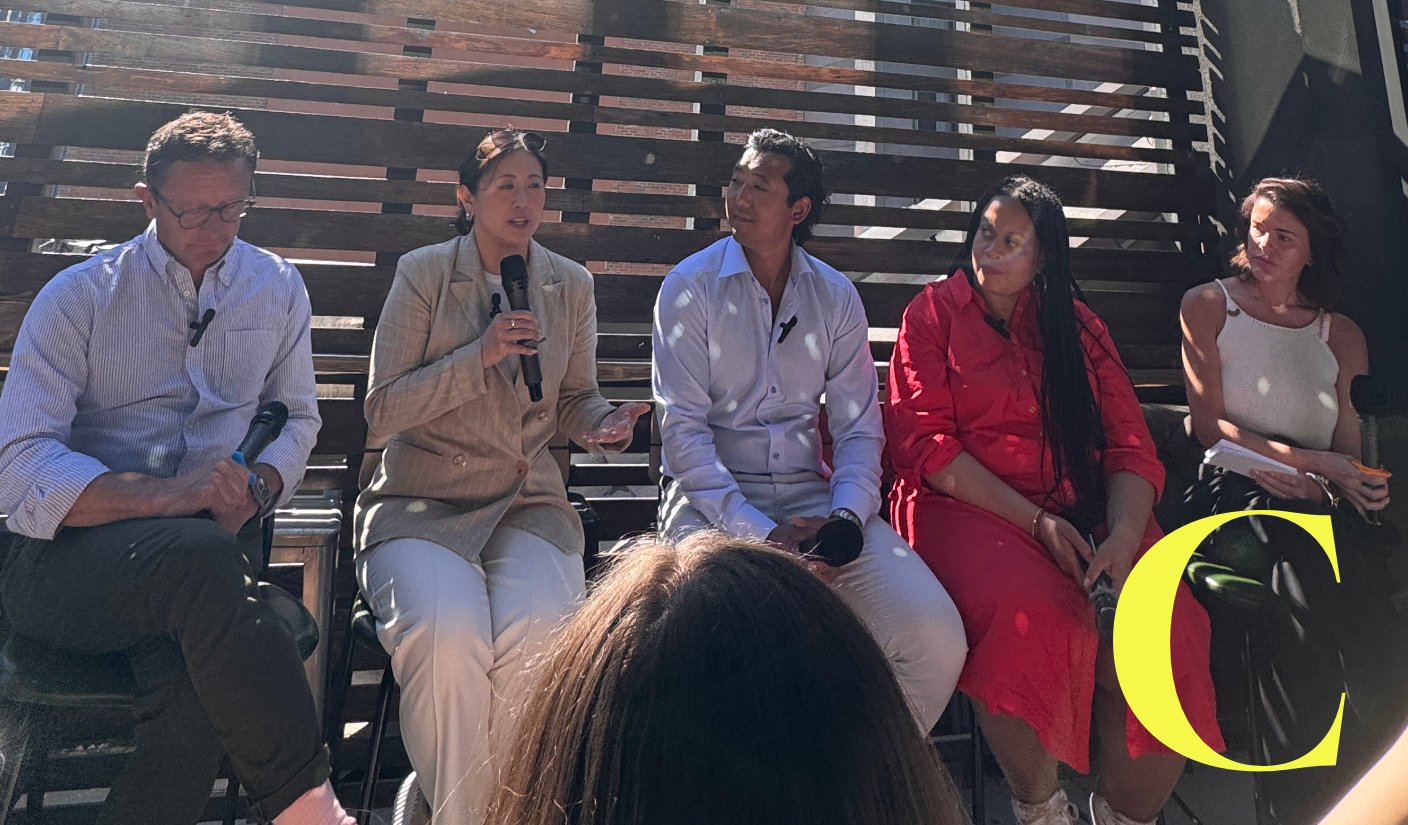
The panel at NYC Tech Week's "The Age of Influence in B2B Marketing" braved the blazing NYC June sun to talk about something I've been on my soapbox about for a while: the rules of B2B content have fundamentally changed, and the executives who adapt will define their industries.
The old model assumed B2B decision-makers operated in a separate universe — rational, data-driven, impervious to the same storytelling that moves consumer audiences. That assumption has more holes than Swiss cheese now. Today's buyers move fluidly between LinkedIn, Reddit, newsletters, podcasts, and AI-powered search before they ever contact a sales team. According to the panel, 83% of B2B decision-makers research products before speaking to anyone in sales.
This means the content game has shifted from interruption to trust, and my brand friends here know that trust is built long before purchase intent shows up.
Not every executive needs to be an influencer. Hope King put it well: the goal isn't volume, it's resonance. A single well-told insight, delivered with credibility and genuine perspective, outperforms a manufactured stream of weekly content.
The core of executive brand-building is clarifying ideas that only you have the expertise to speak to, and delivering them where and when your audience is open to hearing them. When leaders are confident in their story and their business fundamentals, the content follows naturally. When they're not, no posting cadence will save them.
Gordy Hao gave a great, instructive example of when Acorns CEO Noah Kerner did a Reddit AMA and openly accepted critical feedback from the community, it built the kind of trust that no sponsored post could replicate. Vulnerability and directness can be a huge competitive advantage.
Generative engine optimization — how brands appear in AI-generated answers — is quickly becoming as important as traditional SEO. But it's the same playbook with a new distribution layer on top.
LLMs reward what good content strategy has always rewarded: consistency, clarity, and channel alignment. When you're saying the same thing across social, newsletters, blogs, podcasts, and whitepapers, you get cited. The craft still matters — well-written, substantive content earns authority in AI-generated summaries the same way it earned search rankings and reader trust before them. I would argue it matters even more now that the volume of AI-generated slop is immense.
The practical implication for executive thought leadership: a leader who publishes consistently, speaks with a coherent point of view, and shows up across formats is naturally optimized. Their perspective gets pulled into AI-generated research. Their name becomes a reference point as the result of doing the fundamentals well.
The one new wrinkle the panel flagged is that internal silos are a bigger liability than ever. When marketing, comms, and sales are telling different stories, the inconsistency gets amplified across every channel, including the AI layer synthesizing all of it. Unified messaging is now table stakes for visibility.
The panel outlined an approach that mirrors my own editorial model for my Cursive clients: anchor content in long-form (a podcast, a deep interview, a substantive essay) then extract and translate for each platform. The story stays the same while the format adapts.
LinkedIn reaches B2B professionals in a professional mindset, a newsletter delivers deeper analysis to an audience that opted in for it, and a Reddit AMA builds community trust. The voice and the message are consistent, but the language shifts.
This matters for exec brands because it makes content sustainable. Leaders don't need to generate 10 different ideas a week. They need one strong perspective, expressed well, distributed intelligently.
As my brand marketing colleagues know all too well, 95% of B2B buyers are out-of-market at any given time. They're not ready to buy, but they're forming impressions. When the moment comes, they'll think of the names and voices they've encountered consistently over months or years.
This is why executive thought leadership is a long game, and why measuring it purely on last-click attribution misses the point entirely. The panel called for moving toward brand engagement lift and account-based influence metrics as leading indicators. LLM visibility and sentiment are emerging as meaningful signals too.
Marketing budgets are at five-year lows, which makes it tempting to retreat to performance marketing. But the panelists were clear: the upstream investment in influence and presence is what creates the pipeline downstream.
Lisa Kay Davis offered a line that stuck: keep the main thing the main thing. Don't let technology lead strategy. AI tools, new platforms, GEO tactics — they're all in service of a point of view. The executives who build lasting influence do it because they have something worth saying, and they say it with consistency and conviction.
That's the thing that's never changed.
Cursive Media helps executives build the kind of authentic thought leadership that compounds over time. If you're thinking about what your voice could look like in 2026 and beyond, we'd love to talk.