
NEW YORK, NY
Let's talk about that McDonald's video.
If you've been online recently — and your algorithm has any overlap with mine — you probably watched the internet slowly dismember McDonald's CEO Chris Kempczinski for a video in which he eats "the product." It's awkward. It's fluorescent-lit. It's boardroom-staged in a way that convinces absolutely no one. And the phrase that broke the internet: he calls the burger "the product."
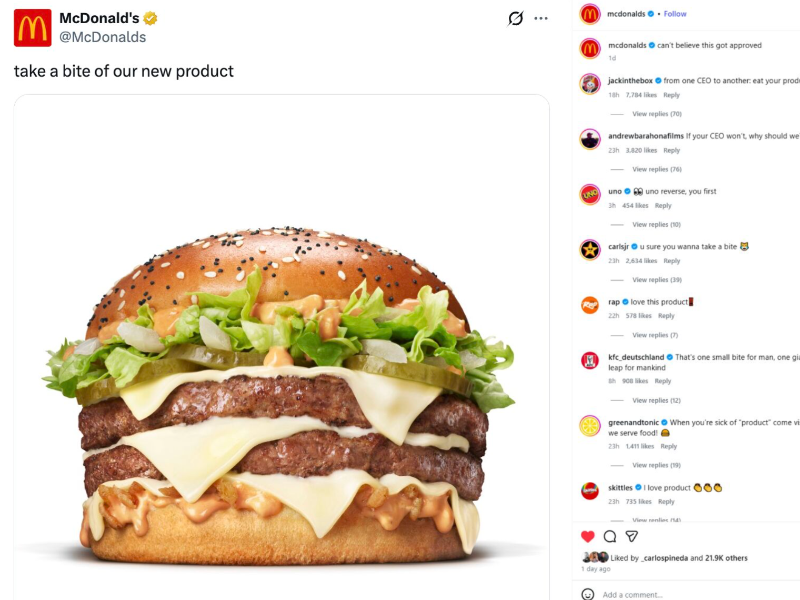
Burger King immediately made it worse (for McDonald's) by resurfacing a video of BK President Tom Curtis doing the same thing, except he's in an actual kitchen, wearing an apron, and taking a real bite of a Whopper as part of an ongoing campaign where customers call a hotline to flag what needs fixing and he responds on video. The contrast was brutal. One looked like a CEO doing homework. The other looked like someone who actually likes burgers.
Inevitably, and at hyperspeed the internet reserves for only the highest-level schadenfreude, the memes and LinkedIn hot takes followed. And now, apparently, an executive brand lesson blog post. Sorry.
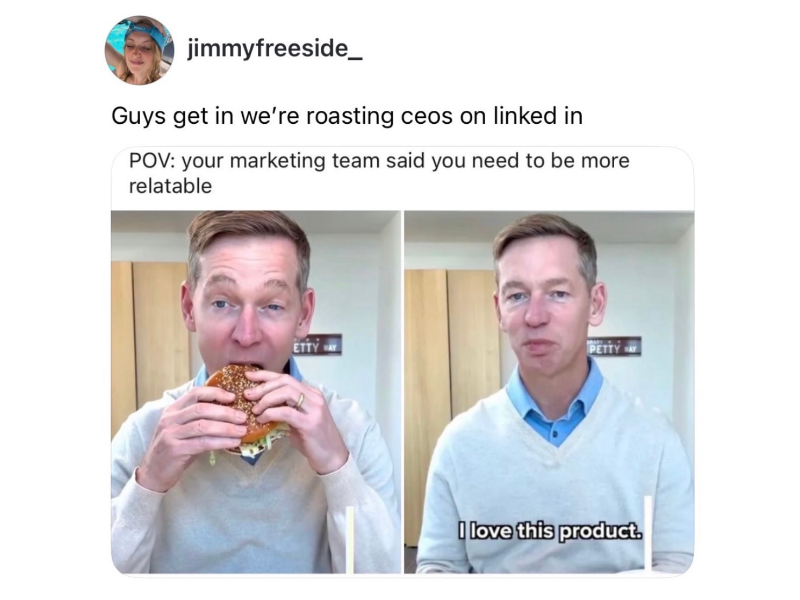
No McDonald's customer has ever walked up to the counter and ordered "the product." They order a burger. A meal. Their usual. The McDouble. Something with extra pickles.
"Product" is internal MBA language. It's the shorthand that makes perfect sense in a boardroom and zero sense to a person standing in line deciding between a Quarter Pounder and a McChicken. The slip wasn't just awkward, it was revealing, and it showed exactly how far Chris K. sits from the actual experience of eating at McDonald's.
PR consultant Adam Ritchie made a sharp observation about this: a Harvard MBA CEO would absolutely see a burger as a product. That's the entire problem. He wasn't translating out of internal language for the camera, he was just talking the way he talks.

This is a real PR lesson: internal language is not external language. "Consumers" versus "guests," "product" versus "burger," "synergies" versus anything a human would actually say. The gap between how a company talks about itself internally and how its customers talk about it is exactly where trust erodes — and occasionally, where viral moments are born.
I want to push back on the take that McDonald's simply needed a better-coached CEO video. That's not the lesson.
Chris Kempczinski is a genuinely impressive business leader running one of the most complex multinational brands in human history. That's no small thing. But "legitimate global CEO" and "guy who loves burgers and is fun on camera" are not the same skillset, and no amount of media training will make them so.
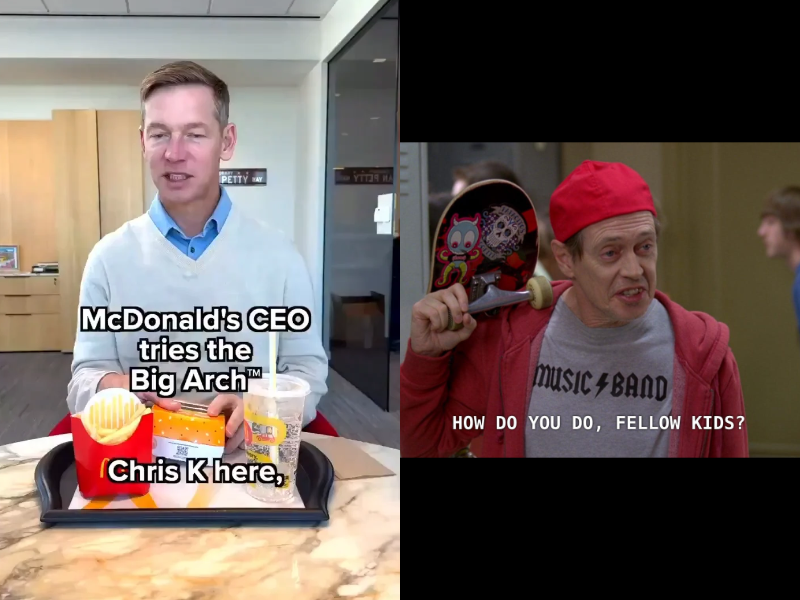
BK's Tom Curtis can pull this off because it's authentic to who he is — and because Burger King built a real campaign around it, not a one-off stunt. There's a customer hotline, follow-up videos, and a feedback loop that makes the brand feel genuinely responsive. It works because it's a campaign with a real structure, starring someone who fits it naturally.
The lesson isn't "CEOs shouldn't do content." It's: play to your strengths, and find the right human for the frame.
What would actually land for Chris K.? Probably detailed, credible thought leadership on what it takes to scale a brand across 40,000 locations in 100 countries. On navigating cultural differences across global markets. On building an iconic brand for the next generation. He knows this stuff and there is an audience for it. It's just not the "relatable guy eats burger" format.
And there is almost certainly someone else in McDonald's leadership — a regional VP who's in restaurants every week, a head chef, someone — who could have pulled off this kind of casual, personality-forward content with zero effort. Exec content isn't "whoever is highest-ranking does the video." It's finding the exec whose personality, expertise, and communication style matches what the content actually needs to do.
The meme spread fast and wide, and it tapped into something bigger than one awkward video.
People began riffing on which CEOs should be required to use their own products the way regular customers do. The Planet Fitness CEO, cancelling their own membership. The Ticketmaster CEO, buying concert tickets during a presale. The HP CEO, setting up a printer. The Kleenex CEO, getting the first tissue out of a box. An airline CEO in a middle seat, economy class, cross-country. The IKEA CEO, building a piece of furniture — instructions implied but spiritually optional.
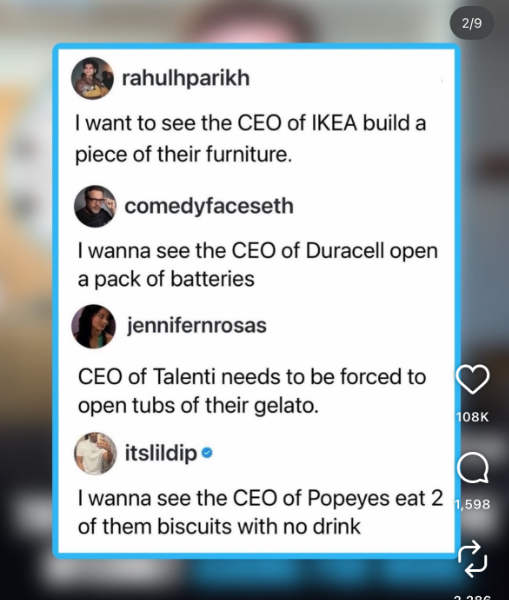
This resonated because it named something real: the disconnect between executives making product decisions and the lived experience of actually using those products as a normal customer. The McDonald's video became a mirror for a broader cultural frustration. And once people entered the chat to point out that while the CEO gets roasted for his taste test, McDonald's is among the top employers of workers who rely on food stamps, and that the CEO made $18.2M last year, over 1,000x the median employee pay — the joke opened a door to a much bigger conversation that McDonald's definitely didn't want.
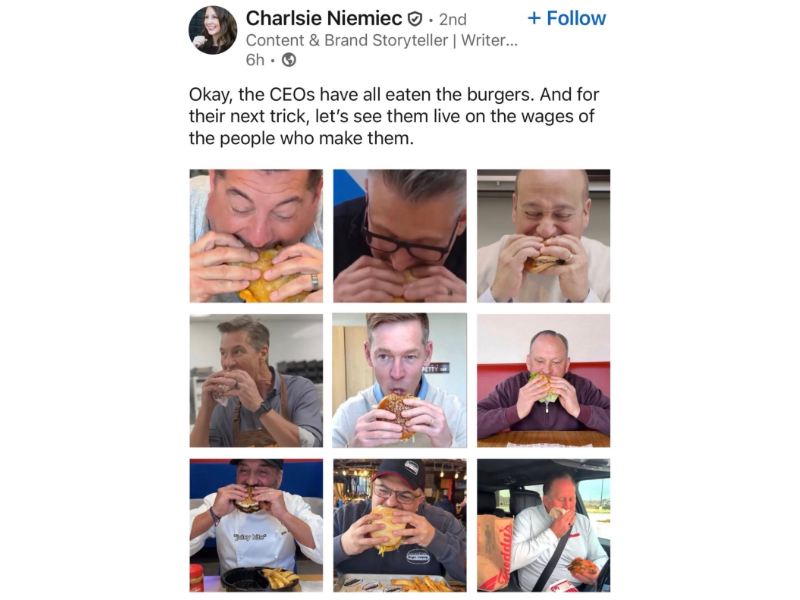
McDonald's social team did try to own the moment. On launch day, they posted a close-up of the Big Arch with the caption "take a bite of our new product" — a self-aware wink at the viral clanger. Their Instagram captioned a post "can't believe this got approved." Other brands piled into the comments: Jack in the Box, Carl's Jr., KFC Deutschland, Skittles, UNO, all doing the brand-commenting-on-brand thing.
Did it land? Debatable. I agree with Brendan Hufford's take that the cognitive biases that will make this look like genius in retrospect: survivorship bias (we'll remember this as the stunt that worked, not the dozens of similar stunts that quietly flopped), outcome bias (if Big Arch sales are up for any reason, the video will get the credit), and post hoc rationalization (what was actually damage control will get rewritten as "confident brand strategy").
To be fair: by some measures, it did work. One PR analyst reported that Chris K.'s personal Instagram following jumped 30%, the original video pulled 157,000 likes, and Big Arch sales exceeded expectations. So perhaps it's complicated.
The honest read is that McDonald's had the brand equity, the scale, and the social team to absorb the embarrassment and convert it into something useful. Most brands don't have that. Viral cringe is not a replicable strategy. The safety net here is 70 years of brand equity and a $200B company, not a brilliant communications plan.
When unexpected (but authentic) exec content works, it really works. BK's Tom Curtis campaign is the proof. Real engagement, customer participation, a feedback loop that makes the brand feel human and responsive. That's what executive content can do at its best.
The formula isn't "be cringe and go viral." It's: find the exec who can authentically represent what your brand actually is, embed them in a real campaign with a real purpose, and let them be themselves. Authenticity isn't performed. It's either there or it isn't, and audiences can tell.
Building a brand by putting a human in the frame is one of the most powerful things a company can do right now. But it requires honest self-assessment: Who is this exec, really? What are they actually good at communicating? Who in this organization genuinely loves and lives this product?
Chris K. should be writing the LinkedIn post about what it takes to scale a brand across 100 countries. Someone else should be eating the burger.
Know your lane. Play your strengths. Add something contrarian. And for the love of everything, don't call it "the product."