NEW YORK, NY
Last week we argued that Dario Amodei's strange silence — 45,000+ LinkedIn followers, zero posts — is working anyway, which is half right. The silence works, but not because of Amodei. It works because Anthropic's comms team has built one of the most sophisticated earned-media operations in tech around him.
While Sam Altman is the protagonist, antagonist, narrator, and credits of OpenAI's story, Anthropic has assembled a cast supporting characters who can carry the company's identity without ever needing the CEO on stage.
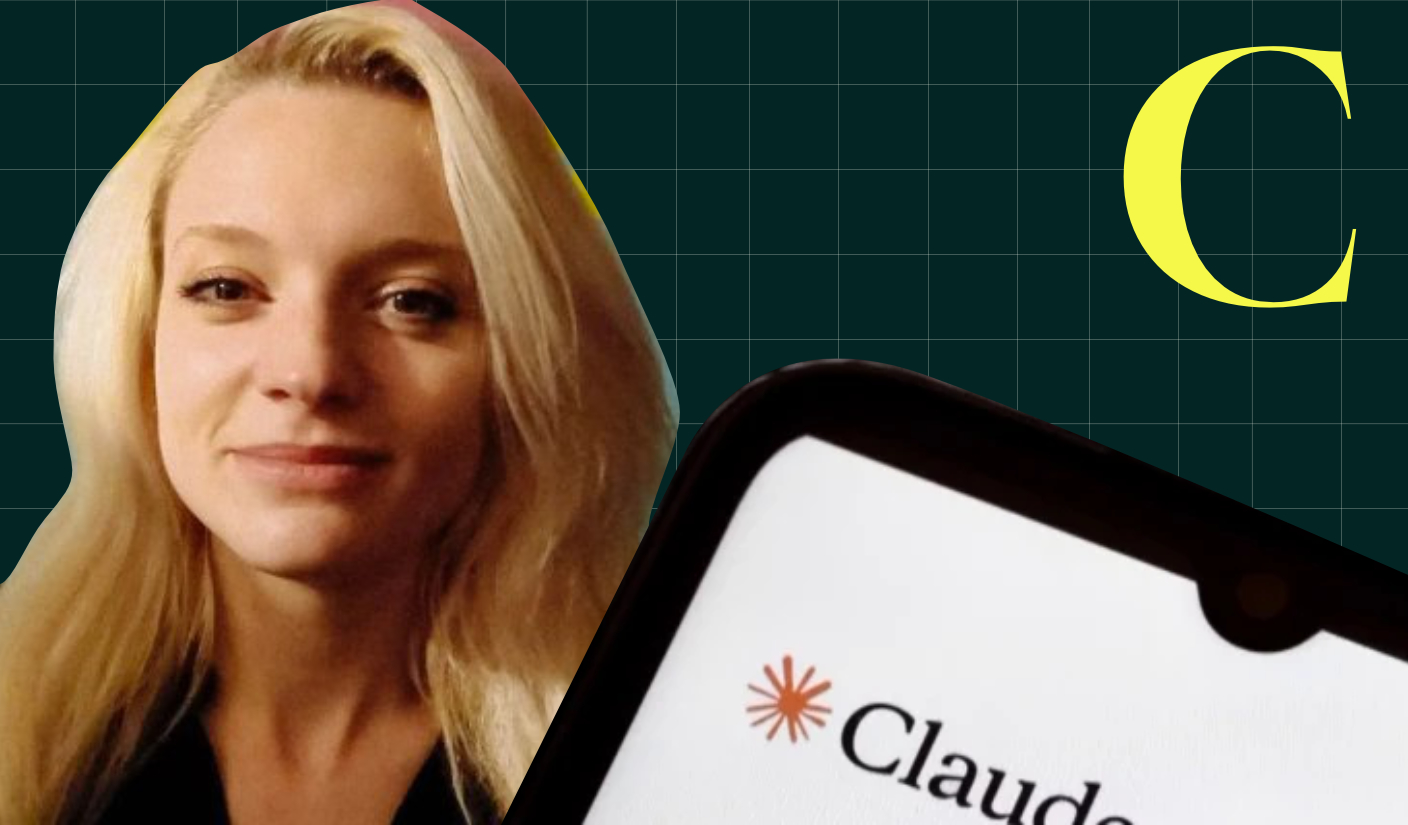
Open the Wall Street Journal in February and you find Amanda Askell, the philosopher Anthropic trusts to teach Claude morals. Her job title sounds like it came from a Booker Prize novel. Her work — a 30,000-word document insiders call Claude's "soul" — is exactly the kind of thing that prestige media cannot resist.
Open The Verge in December and Hayden Field is profiling Deep Ganguli and the nine-person societal impacts team whose explicit job is to publish "inconvenient truths" about Anthropic's own product. They built a tool called Clio. They flagged that Claude was being used to generate explicit content. They published it. That story did more for Anthropic's safety credibility than any number of Amodei tweets could have.
Open Time in March and you find Anthropic on the cover as "the world's most disruptive company" — for losing a Pentagon contract over autonomous-weapons red lines. The company turned a lost government deal into a moral-authority front page.
And underneath all of it, the company's own transparency hub and voluntary commitments page do the unsexy work — receipts that the CEO can point to without having to say anything himself.
OpenAI is Sam. One voice, one face, one personality risk. When ChatGPT misbehaves, when there's a board coup, when a former employee starts talking, it lands on him. The brand and the man are the same surface area.
Anthropic has distributed that surface area across at least a dozen named people. Amanda Askell carries ethics, Deep Ganguli carries societal impact, Jack Clark carries policy, Jared Kaplan carries science. Amodei, when he does appear, carries geopolitics and capability. No single one of them has to be everything. Which means no single one of them can be broken.
It also means Anthropic can speak to four different audiences in four different voices simultaneously: the researcher audience reads the safety papers, the policy audience reads the voluntary commitments, the press reads about Amanda Askell, and Washington reads the Pentagon story. Each audience gets the version that flatters their priors.
Amodei's silence is a resource. Every time he doesn't speak, his eventual speaking gets more valuable. The CEO speaks rarely, and only on the highest-stakes topics: data centres, national security, the $50B announcement. That's portfolio management of executive credibility.
The comms team understood that a CEO who's everywhere is, eventually, somewhere boring. A CEO who appears twice a year, on substance, becomes a signal.
Three obvious moves are sitting on the table.
First, more named characters. The supporting cast model works. There's no reason Anthropic shouldn't have a public face for alignment, one for red-teaming, one for the Economic Index, one for Claude's developer relations. Five more Amanda Askells.
Second, long-form audio. The WSJ Askell profile and The Verge societal-impacts feature are made for podcast extensions. Get Askell on Ezra Klein and Ganguli on Hard Fork. Let the cast tour the prestige circuit while Amodei stays on his data-centre-and-Senate beat.
Third, productize the transparency hub. Right now it reads like a compliance page. Turn it into a quarterly "state of the model" — written, video, indexed. Make it the thing journalists check first.
The first is the saint problem. The more you brand yourself as the ethical option, the further you fall when something inevitably goes wrong. Anthropic is taking Pentagon money on some contracts while refusing it on others. It had to publish a statement softening its tone toward the Trump administration after David Sacks attacked it. The cast carries credibility now; it will also carry hypocrisy charges later if the company's actions stop matching its press.
The second is the Askell problem. Distributed brand means distributed key-person risk. If Amanda Askell ever leaves — and the entire AI industry is one phone call away from poaching her tomorrow — Anthropic loses a chunk of public identity it didn't fully own to begin with. Concentration risk on Altman is one thing; dependence on a cast of named contractors you can't lock down is another.
For now, though, the strategy is doing exactly what it's designed to do. Amodei doesn't post because he doesn't have to. The story is being told without him — and the story is, by some distance, the one Anthropic wants told.
The empty LinkedIn is an understudy bench. And the show is going on just fine.